

The Local newsletter is your free, daily guide to life in Colorado. For locals, by locals.
Heading into the final winter break of her college career at Adams State University, 21-year-old Priscila Zapata Chavez felt unusually fortunate. The daughter of a migrant mother who sorts potatoes in Center, 30 miles northwest of Alamosa, the marketing major had never imagined her life would include a college degree.
Figuring out how to pay for higher education had once seemed impossible for Chavez, who arrived in Colorado’s San Luis Valley from Chihuahua, Mexico, in 2016 and shared a rental with her mother, who often struggled to cover the basics. College, if she thought about it at all, was a private fantasy. That changed during her sophomore year at Center High School, when an Adams State administrator told Chavez’s class about the federal College Assistance Migrant Program (CAMP) that offers free first-year tuition, room and board, and monthly stipends for thousands of first-generation students from farmworker families across the country. Suddenly, Chavez thought, she had an “opportunity to become something and someone.”

She enrolled at Adams State in 2021 to study marketing. The Alamosa school was close to her mother, but CAMP funding allowed Chavez to live in a campus dorm, where she made friends who went with her on fishing trips or on visits to the nearby Great Sand Dunes National Park. Beyond immediate financial help, CAMP also provided her with regular academic check-ins and a counselor who helped Chavez navigate the paperwork for financial aid that eventually offset her future college costs. The program “was there for everything,” Chavez says. By the end of her freshman year, school had gone so well that she began recommending CAMP to younger friends across the Valley, which ranks among the state’s poorest regions.
In October, Chavez learned the U.S. Department of Education had cut off new CAMP funding at colleges across the country and her university would be forced to discontinue its program at the end of the academic year. The halt is a result of the Trump administration’s move to freeze federal support for migrant-education initiatives, including the 53-year-old CAMP, even though the program has helped roughly 2,400 students attend colleges across the country each year. The funding freeze abruptly slashed about $24 million over five years at dozens of campuses nationwide, prompting colleges to lay off staff, shut down services, and scramble to keep current students afloat as thousands of prospective CAMP students lost promised support. In budget documents, the Trump administration called CAMP “extremely costly” and said the program had “not been proven effective.”
For Adams State, the decision means a lifeline for the San Luis Valley’s first-generation students soon will quietly disappear. “To me, it says [the government] doesn’t care about” migrant students, says David Tandberg, Adams State’s president, who estimates 30 first-year students (or roughly 6 percent of each freshman class) rely on CAMP aid annually. A 2025 report from the Department of Education to Congress showed that approximately 96 percent of CAMP participants who finished their first year stayed in college the following year, figures that mirror Adams State’s self-reported numbers.
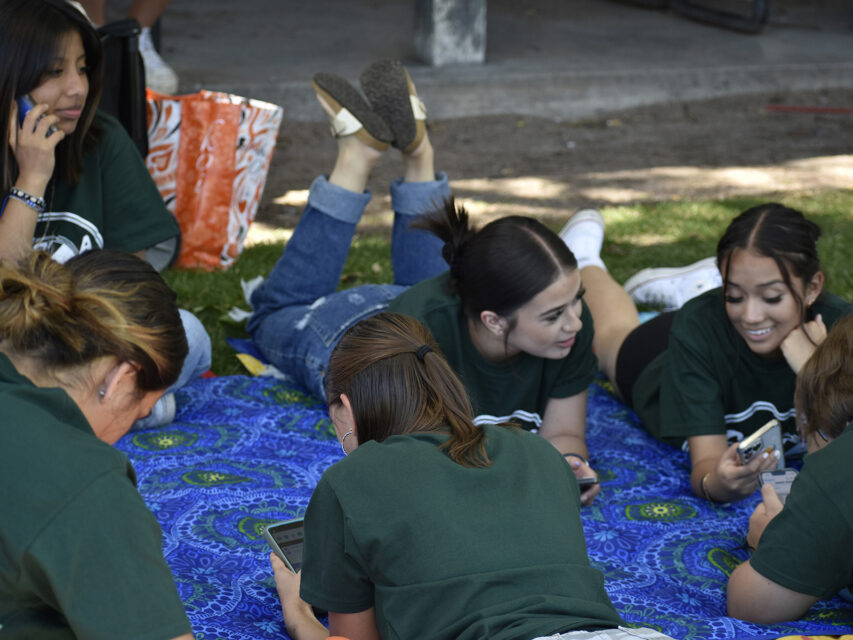
The university had been bracing for threats to the program for months before the Department of Education’s decision. Adams State explored alternative funding sources, ran projections on how long it could self-fund its own version of CAMP, and rallied alumni to write emails and make phone calls to the local congressional delegation, the Department of Education, and the White House, begging to support the program. Tandberg backstopped the effort with his own appeals, but nothing worked. “Unfortunately, the outcome wasn’t what we wanted,” the school’s president says. “I feel like we did everything we could.”
Adams State is in the heart of the San Luis Valley, where migrants and seasonal workers tend potato, alfalfa, wheat, and barley farms. CAMP helped keep some of those laborers’ children close to home while they also earned a degree—family support often made a difference between persistence and dropping out. In Alamosa County, Hispanic residents account for nearly half of the population, and 18 percent of its residents live in poverty—nearly twice the statewide rate. “We’re in a very economically depressed area,” says Michael Stewart, an associate professor of sociology at Adams State who specializes in race, culture, ethnicity, poverty, and inequality. First-generation students often go on to take care of families and communities once they graduate and enter the workforce, Stewart says, which made CAMP particularly important to the Valley. “Adams State is right at the top in terms of driving social mobility” in the region, the professor says.
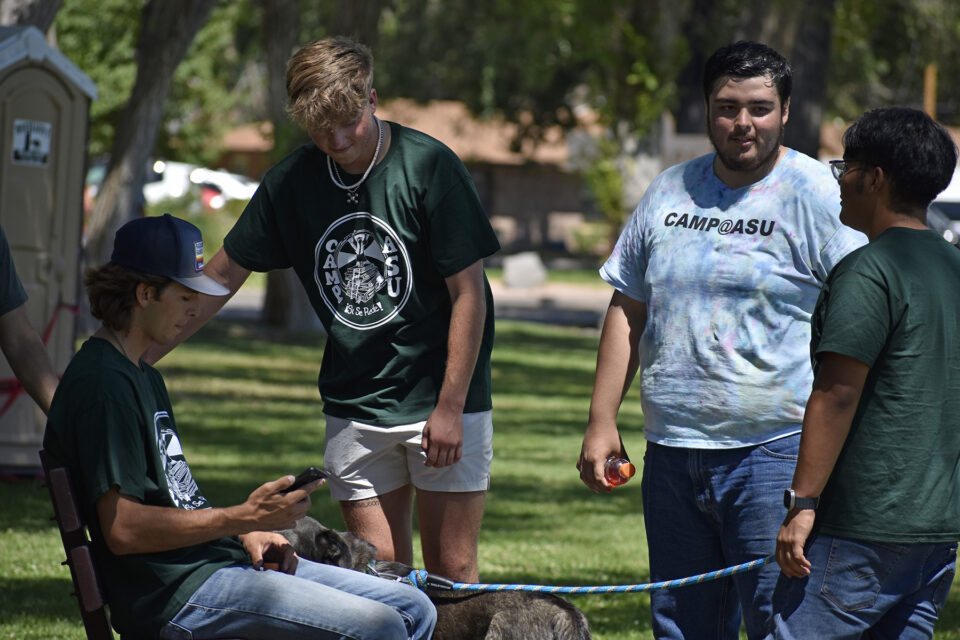
Since CAMP’s inception, in 1972, more than 1,200 Adams State students participated in the program. Classmates bonded over their similar backgrounds and counselors helped students adjust to new academic and social challenges. “There’s a personal level, like, ‘I know I have somebody who has been through this who can help me with it,’” says Mayra Cristobal, an Adams State junior who grew up in Alamosa and is studying social science. “CAMP gave me space to speak about my story.”
Colorado had the fifth-most universities nationwide that participated in CAMP, which means Adams State isn’t facing its cuts alone. Metropolitan State University of Denver shut down its program, and the University of Colorado Boulder is covering CAMP through June while the school’s Bilinguals United for Education and New Opportunities (BUENO) Center searches for alternative funding.
Even if it’s temporary, CAMP’s absence will affect students whose paths to college would be unnavigable without it. Much like Chavez, Cristobal never imagined attending college before learning about the program at Adams State. Her parents immigrated from Guatemala and work at a mushroom farm in Alamosa. Though she has an older cousin who previously graduated from Adams State with CAMP assistance, Cristobal wasn’t sure how the program worked. She eventually went to a CAMP session at her high school, and a degree suddenly seemed possible. She hopes to pursue a career in law, preferably somewhere in the Valley.
Stories like that are why CAMP participants worry about new high school graduates who won’t have access to the program at Adams State. Cristobal’s 15-year-old brother wanted to apply to Adams State and use CAMP to pay for his first year. Their mother, a cook at a Chinese restaurant in Alamosa, was already figuring how to work a second job to help pay for the other three years. Now, the family’s aspirations are in doubt.
Chavez, too, knows high schoolers who planned to apply for CAMP. When the federal funding was cut, she says, “They got scared” about their futures. “Like, ‘What are we going to do?’”
Although CAMP’s termination at Adams State has been jarring, its current freshmen will avoid some of the worst fallout. Federal funds covered the remainder of the calendar year, and the university’s foundation is underwriting CAMP funding for the spring semester. From there, those students still can apply for Pell Grants, other need-based grants, and institutional scholarships to help pay for the rest of college. But the process of applying for aid can be intensive, particularly for students who lack financial guidance and relied on CAMP staff for help.
Chavez says she never would have survived college without CAMP. The senior plans to graduate in fall 2026 and wants to work in marketing—maybe as a social media manager or in a sports team’s front office. In the meantime, she imagines what it will mean to walk across the stage on graduation day. She also thinks about her mother, who came to the U.S. to do hard, thankless work—and still managed to create an opportunity that had never existed for their family. “My mom always wanted me to achieve big things, and me going to school has been such a dream for her,” Chavez says. “Now, I tell her, ‘Mom, we are graduating.’”