


The Local newsletter is your free, daily guide to life in Colorado. For locals, by locals.
On a recent trip to Moab, I kept thinking about a very specific moment from the early 2000s: standing barefoot at a Main Street gas station, rinsing off layers of red dust after days of dirtbagging in the desert. Back then, Moab felt scrappy and lonely. No one cared if a crew of broke college kids commandeered the water supply for a makeshift shower. In fact, it was celebrated.
That version of Moab is gone. Or, at least, it’s harder to find.
These days, the parking lots at Arches National Park fill before sunrise, Canyonlands overlooks come with lines, and even a quick hike can feel like a party with 500 of your closest friends—and a few dozen Jeeps.
But here’s the thing: Moab is still very worth it. You just have to know where to look.
My advice is simple: Skip the headline hikes. Drive a little farther. Choose the trail that doesn’t scream for attention. If you’re willing to put in some extra effort, you can still find the Moab that many of us fell in love with in the first place.
Are these hikes complete secrets? No, because we have the internet (and people like me) telling you where to go. But they are quiet, beautiful, and oh-so worth your time. Below, six of the best spring-perfect dayhikes in Moab.
Trough Springs Trail
- Drive time from Moab: 70 minutes
- Distance: 5 miles, round-trip
- Difficulty: Challenging
Trough Springs is a commitment—and that’s exactly the point. Located over an hour away from Moab, Trough Springs doesn’t draw the same casual traffic as the big-ticket trails within minutes of downtown. (Plus, you have to really love hiking to drive two hours, round-trip, for a five-mile adventure….) But what it lacks in convenience, it makes up for in solitude. The hike begins on an exposed canyon rim, where the sun hits hard with next to no shade. Thankfully, it doesn’t last long. A steep rock staircase drops more than 1,000 feet into Kane Creek Canyon, changing the vibe from mellow to rugged in a hurry. At the bottom, shade takes over and provides a much-needed respite that can be tough to find in the desert.
As a former cattle route, the trail carries a utilitarian history, and the springs offer a welcome break. It’s a stark contrast to the bustle of downtown Moab—and worth every minute in the car. Tip: Don’t drink the water; it’ll really ruin the next day or two of your life.
Dellenbaugh Tunnel
- Drive time from Moab: 45 minutes
- Distance: 3.6 miles, round-trip
- Difficulty: Moderate
Northwest of town out in the Dubinky Well area, Dellenbaugh Tunnel feels removed in the best way. At the start, skirt the 4×4 road and hop on the hiking path, which winds across slickrock marked by green paint dashes to guide your way. The trail rolls pleasantly over open terrain before dropping into a wash that leads to the tunnel. You’ll do a bit of scrambling, but nothing technical; it’s more fun than anything. Inside the tunnel, debris from past rainstorms can cause blockages, but you can make it through. (It’s a good reminder, however, that the desert is a volatile place where water can absolutely make or break your day.)
Compared to massive features like the arches in the park, the tunnel might not feel as dramatic. But it’s still pretty cool, and the highlight is the experience of getting there without a paved road to lead the way.
Hidden Moonflower Ladder
- Drive time from Moab: 10 minutes
- Distance: 0.1 mile
- Difficulty: Moderate
We admit: It’s a stretch to call this a “hike,” but it is a fun-albeit-sketchy adventure for those up to the challenge. Tucked into the mouth of Moonflower Canyon, the Hidden Ladder is one of those “how-did-I-not-know-this-was-here” features that most folks (kids and adults) love. The adventure centers on a series of old ladders wedged into a narrow crack in the rock. The first is low and approachable—super easy for kids to scramble onto. The second requires a bit more reach and an occasional boost from taller folks. Near the top, you’ll find a slim slot that forces you to turn sideways and shimmy through before popping onto a rock outcropping where surprisingly expansive views make the tight squeeze worth it. Until you have to climb back down, of course.
It’s quick, a little questionable, and a lot of fun. Bonus: The area is rife with pictographs, including near the canyon entrance. It’s pretty wild to stand in front of some of the earliest forms of human expression, knowing the bustle of 21st-century Moab is just down the street. Still, be smart: Give the rock art some space so we can continue to preserve it for future generations.
Juniper Trail (Sand Flats Recreation Area)
- Drive time from Moab: 10 minutes
- Distance: 1.9-mile loop
- Difficulty: Moderate
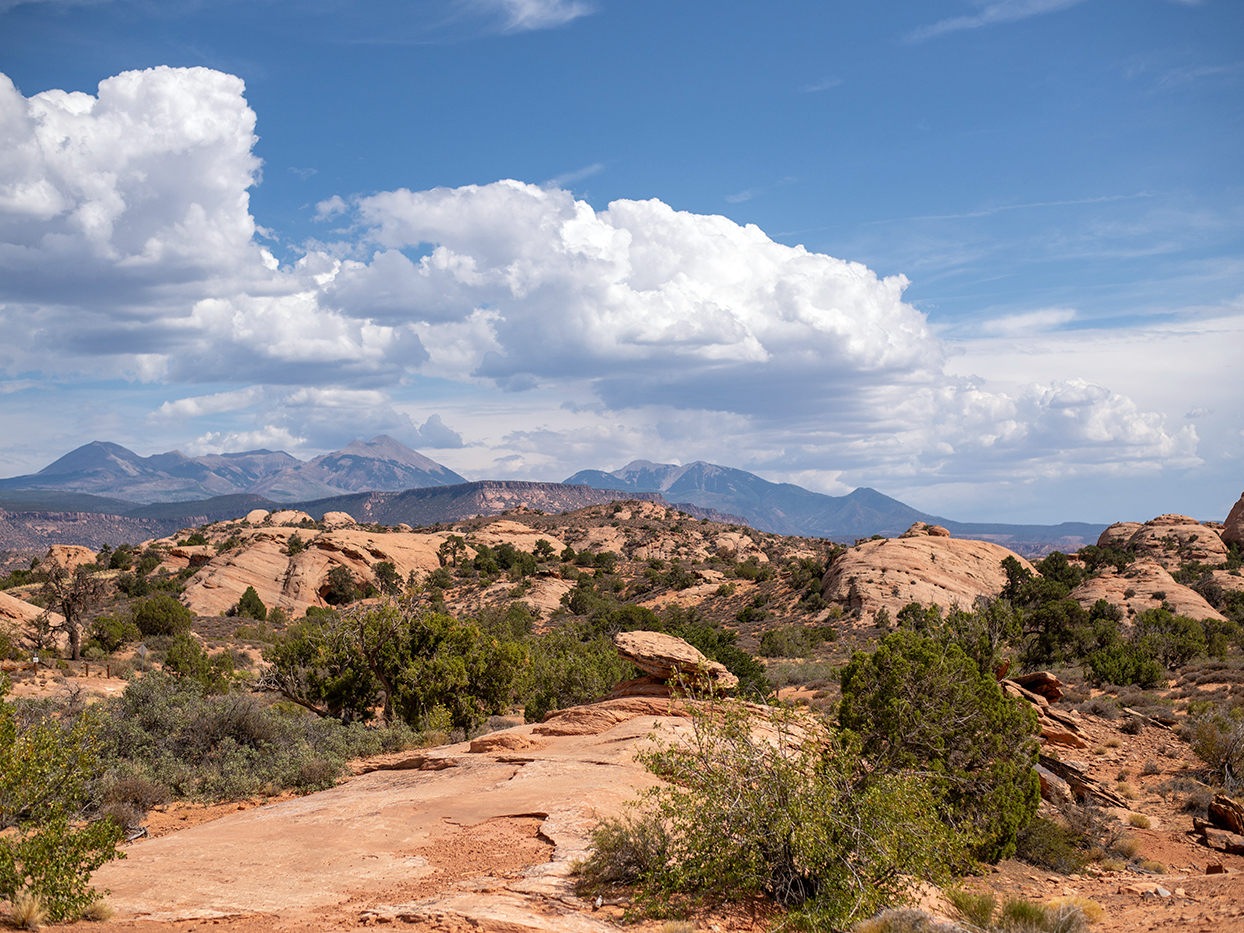
Even if you haven’t heard of the Sand Flats Recreation Area, you probably know it by proxy. Home to the famous Slickrock and Porcupine Rim bike trails, the Juniper Trail is a hiking-only loop tucked into this world-famous mountain biking mecca. Those who opt to ditch tires in favor of boots will get a rare break from the buzz of wheels in the surrounding area. The trail itself is short and mellow, making it ideal for beginners, families, or anyone looking for a quick outing. There are a few sections with mild exposure, but nothing overwhelming (except for the sun). With little to no shade, the Juniper Trail can feel brutal—get up early to beat the heat.
The payoff comes at the top. A gentle climb leads to a mesa with wide-open views across the Sand Flats, with the La Sal Mountains rising in the distance. It’s a basic hike, but there is something deeply rewarding about finding solitude amidst the madness.
Mary Jane Canyon
- Drive time from Moab: 40 minutes
- Distance: 9 miles, round-trip
- Difficulty: Moderate
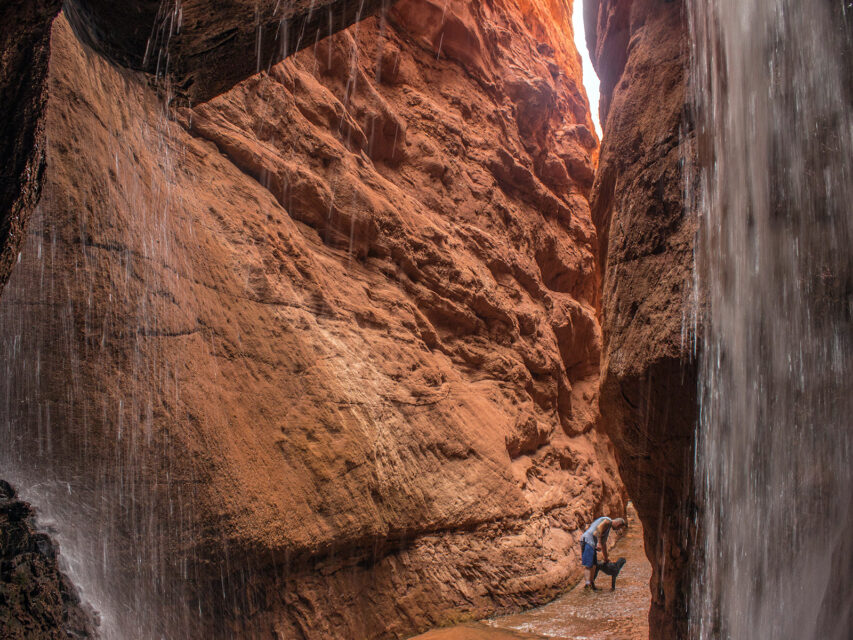
Speaking of heat, there is no better place to find a little respite than the cool-and-wet Mary Jane Canyon. Moab and the surrounding area are jam-packed with slot canyons, and this one offers a longer route beside flowing water. The hike begins in open terrain, with otherworldly views of surrounding buttes and desert skies. Gradually, the landscape tightens as you continue to tromp up the creekbed. Your feet will get wet, but that’s the best part.
The sense of enclosure builds slowly until you’re fully surrounded; near the end, the walls will tower a hundred feet above you. But the real highlight is the 30-foot waterfall at the turnaround point. Between the shady canyon and cool waterfall mist, this is a place to linger. (As with any slot canyon, weather matters. Flash floods are a real risk, so this is not the place to be if rain is in the forecast.)
Amphitheater Loop
- Drive time from Moab: 40 minutes
- Distance: 2.9-mile loop
- Difficulty: Moderate
Big scenery? Check. Big crowds? Not here. Starting from Hittle Bottom Campground northeast of town, the Amphitheater Loop is a delightful jaunt with epic desert scenery. The key is direction: Hike it counterclockwise to tackle the steepest section on the way up, rather than awkwardly sliding down it on the descent. From the outset, the Fisher Towers steal the show. The jagged red-brown spires rise in the distance, pulling your attention forward as you move across the landscape. Navigation is straightforward, but it pays to stay alert. Cairns mark the loop, but some can lead you astray. When in doubt, stick to the main wash and ignore the spurs up smaller washes.
Midway through, a large boulder signals the start of the short scrambling section. It’s more than you’ve seen up until this point, but it’s quite manageable, even for kids. Plus, it livens up the adventure for those who are ready to wiggle. Beyond that, the trail mellows through the heart of the Richardson Amphitheater and you can simply soak in the sights.