
The Local newsletter is your free, daily guide to life in Colorado. For locals, by locals.
Maybe the trend galloped into Denver in March 2024, when Beyoncé released Cowboy Carter. Or maybe it started in 2019, when Lil Nas X’s earworm “Old Town Road” was No. 1 for 19 straight weeks. Add the mass appeal of Yellowstone; mix in record-setting auction prices for Western paintings, like a Remington that went for $11 million this year; and season with a dose of back-to-the-land nostalgia, and pardner, you’ve got yourself a phenomenon that has permeated every corner of American pop culture.
Good luck walking a block in RiNo without spotting a barista in a bolo tie or a tech bro who’s paired his Cotopaxi puffer with a pair of Stetsons.
“The West is definitely having a moment,” says Denver artist Ariana Barnstable, creator of the Lazy Cowgirl series. Her whimsical watercolors of stylish Colorado women (sometimes in the nude, except for boots and hat) have earned her thousands of Instagram followers, and she’s had residencies at chic spaces like the Ramble Hotel. Barnstable didn’t grow up on a ranch; a cynic might say she’s merely cashing in on a trend. Or you could call her a savvy businesswoman who’s blazed her own trail—and what’s more cowgirl than that?
Rural Coloradans may roll their eyes at the way urbanites cosplay their identity, but on the whole, they’re a welcoming bunch. “I’m good that the lifestyle has become trendy again,” says Terry Nash, who raises cattle (and writes cowboy poetry) in Loma. “I’m all about keeping Western heritage alive. If city people get enthused about our culture, they just might stumble onto more authentic representations.” Read on to learn how to do just that.
Jump Ahead:
Read More: Where to Buy Cowboy Hats, Boots, and Western Wear in Denver
1. Take a line-dancing lesson.
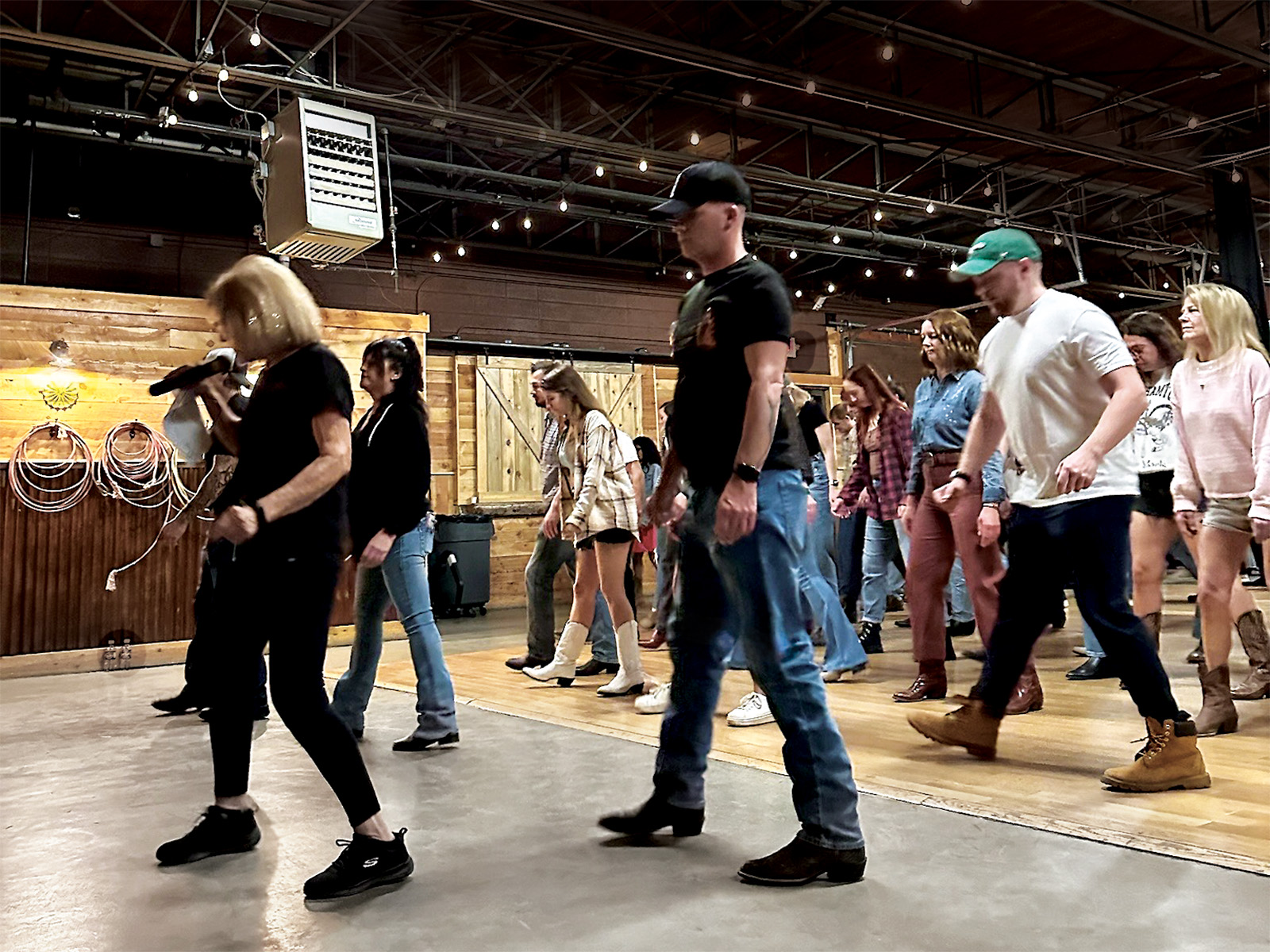
There’s something about going to the Grizzly Rose when the sun is still up that feels criminal. Perhaps it’s the fact that your pre-entry pat-down occurs in broad daylight, or that the 2,500-square-foot dance floor is eerily empty. My outfit—a denim vest over a flowy white sundress paired with a pristine pair of white cowboy boots—had felt perfect at home but suddenly seemed silly as I stood at the empty bar, waiting for the bartender to slide the sweating bottle of liquid courage I’d ordered across the counter.
The Grizzly Rose has been the home for mechanical-bull-riding, country-music-loving, line-dancing Denverites since 1989, so it’s no wonder this honky-tonk’s reputation precedes it. “That’s where all my friends would go to party underage,” my Colorado native hair stylist told me recently. A friend issued a warning: “They have escorted me off the floor for not knowing the dance before, just a PSA.”
Our Saturday evening line-dancing lesson ($5, but they’re free on Sundays) was slated to start any minute, and I feared the epic hoedown I had promised the six friends I’d wrangled into going with me would fall woefully short of my hyperbolic texts. Drinks in hand, we headed to the banquet room for a crash course in hitches and heel grinds to Miranda Lambert’s “Ain’t in Kansas Anymore.”
My dance background is more ballet shoes than boots, so I hoped the dim lighting would mask my missteps. For the first 20 minutes, my crew and I staked our claim in the very back, giggling when we pivot-turned the wrong direction and clumsily bumped into one another. The hall was quiet save for the shuffle of our shoes on the hardwood floor and the instructor from local dance school Two Left Boots calling out our counts.
But as the class went on and the room filled with folks of all ages, the energy started to shift. Dancers would let out a holler when they nailed an eight-count. Attendees (some in Western attire, some in clubwear, some in jeans and T-shirts) started asking each other for help with tricky sequences. After we successfully ran through the whole dance with music, everyone exchanged high-fives and compliments.
Soon, the hour was up, and the instructor unleashed us into the nightclub. In the time we’d been holed up in the back room, the Rose had come alive. A band played “Wagon Wheel” while couples spun on the dance floor and gutsy patrons with something to prove flailed atop the dueling mechanical bulls. When we heard the first twangs of our song, we rushed to snag spots on the now-crowded floor.
This was not our usual Saturday night stomping ground, but as we laughed and lockstepped alongside 100 other people, none of us were eager to leave. Instead, we stumbled our way through countless other country tunes. Despite occasionally treading on a stranger’s toe or swiveling when I should’ve shuffled, no one ever came to remove me from the floor. —Jessica Giles
Read More: The 6 Best Western Bars in Denver
2. Learn to appreciate cowboy poetry.
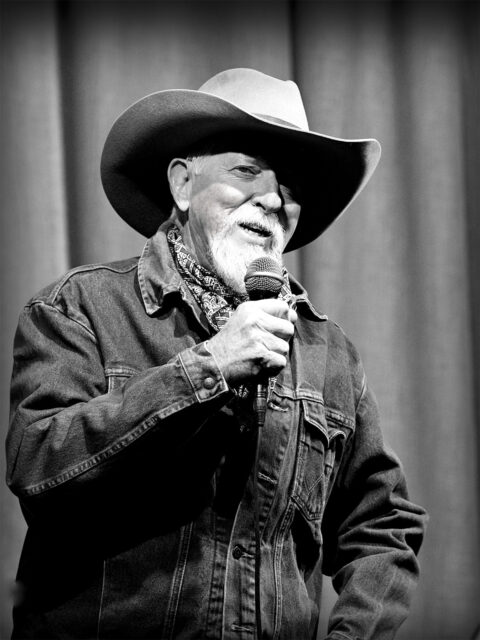
One night in the early 1980s, a long-haul trucker named Terry Nash booked a room at a Holiday Inn in Fort Collins. The sound of a guitar drew the weary driver into the bar, where he found a man seated in the corner, singing and strumming. Nash stayed to listen, tossing dollars into the empty boot that served as a tip jar. “He was playing songs I’d grown up listening to my dad sing,” Nash remembers. He befriended the man, a performer named Gary McMahan, who introduced him to the art of cowboy poetry—a folklore tradition passed down around campfires, on ranches, and in watering holes across the West since the 1800s.
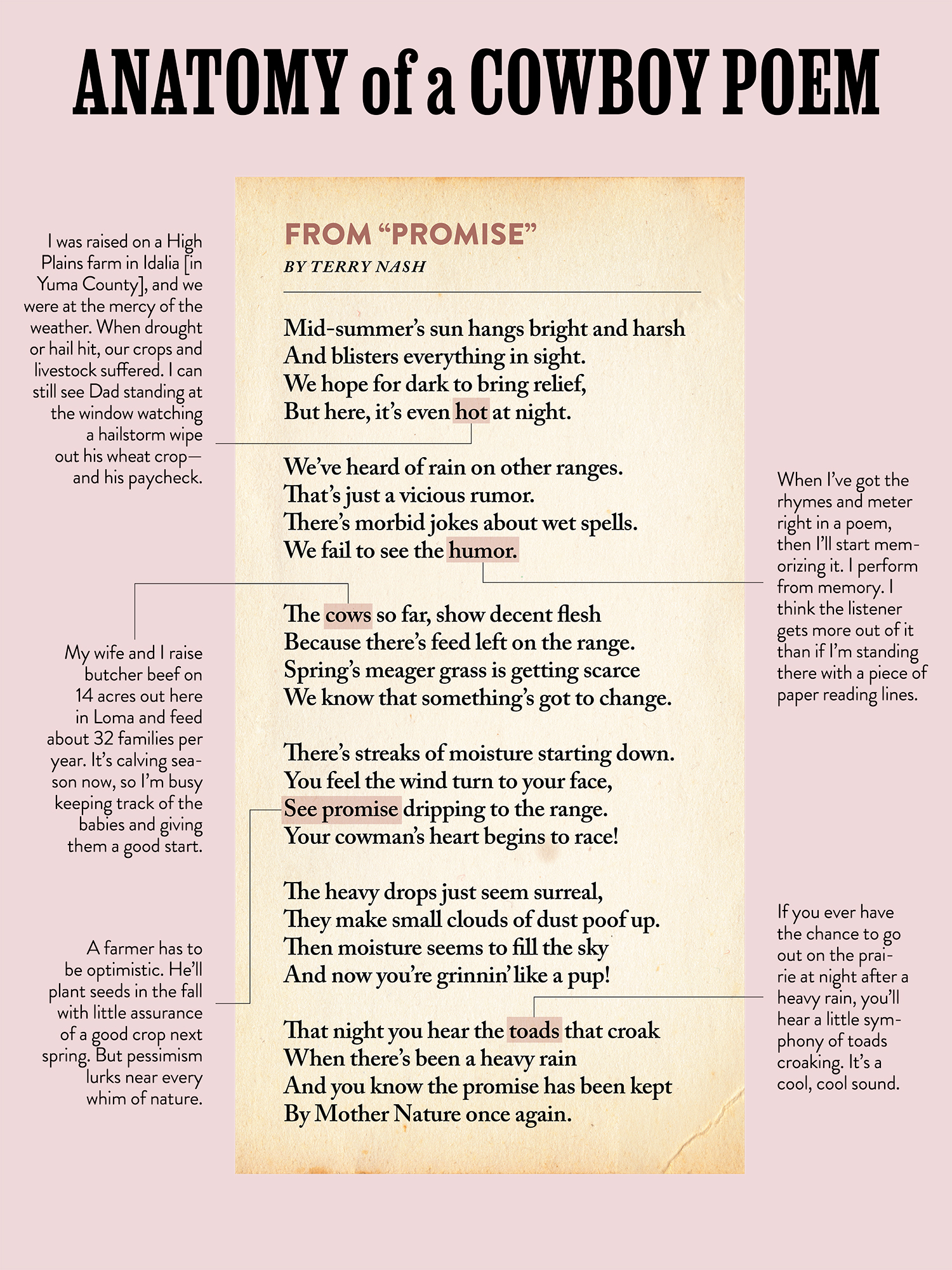
The medium often involves tales told in song, and it’s best performed and enjoyed live. Both Nash and McMahan have traveled the country plying their trade; McMahan co-founded the Colorado Cowboy Gathering, held every January in Golden for 37 years. We asked Nash, now a cattle rancher in Loma, to break down the composition of one of his poems.
3. Go to the rodeo.
1. Rooftop Rodeo (July 6–11; Estes Park)
Bring the whole family to this traditional rodeo, which has a fun slate of events kids can try: mutton busting, aka sheep riding; cash catch, in which little ones try to grab a $20 bill from a sheep’s back; and good ol’ stick horse riding.
2. Rocky Mountain Regional Rodeo (July 10–12; Golden)
The nation’s longest-running gay rodeo has been welcoming all since 1983. Traditional competitions such as barrel racing and bull roping are on the docket, as well as lighthearted events like the wild drag race and a pageant.
3. National Western Stock Show (January 9–24, 2027; Denver)
Nicknamed the Super Bowl of stock shows, this 120-year-old celebration of Western life draws 700,000 revelers to Denver every January. Watch elite competitors buck and ride, take a country swing dance class, or marvel at trained pigs in the Top Hogs of the Wild West Show.
Read More: 7 Rodeos in Colorado You Need To Check Out This Summer
How Colorado’s Gay Rodeo Community Helped This Cowboy Find His Way Back to the Arena
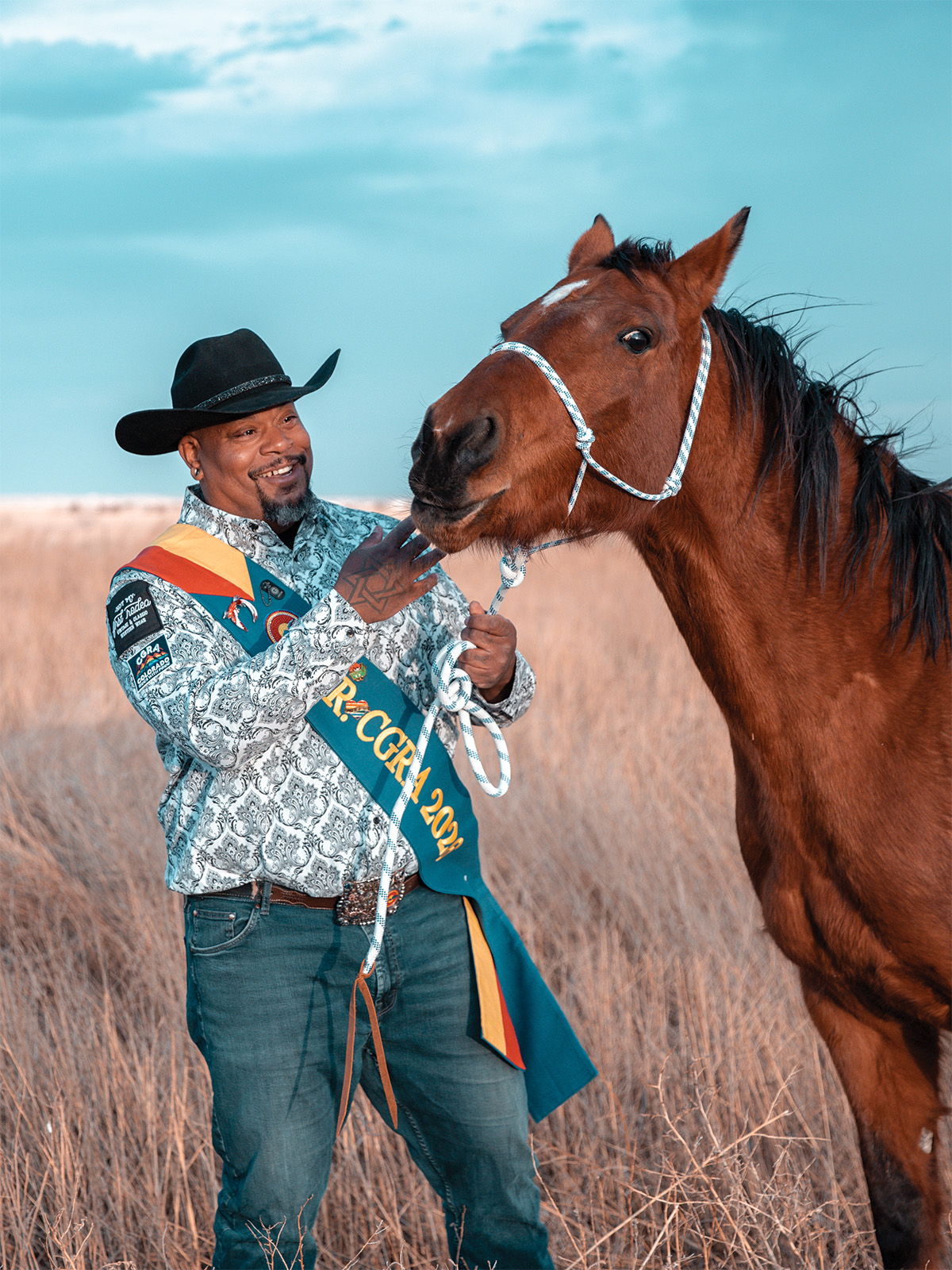
I grew up competing in the rodeo in South Dakota. We raised Hereford cattle, quarter horses, pigs, and chickens on our ranch. Once when I was a teenager, we did a trail ride and moved cattle about 400 miles over three weeks. Then I stepped away from all that while I was in the Army for 15 years. I was a human intelligence collector—they used to call them interrogators. I deployed to Bosnia, Kosovo, Iraq, Afghanistan, Egypt, and Somalia, and I speak 12 languages.
My signature event is chute-dogging. You climb down with the steer in the chute, and when they open it, you have to get him past a certain line, then wrestle him to the ground. Once all four feet are in the air, you get your time. It can be risky—I’ve had a few horns go places they shouldn’t—and it’s quick. The world champion time last year was something like three seconds. I also compete in team roping, breakaway roping, and steer decorating. That last one is a team event where we tie a ribbon around a steer’s tail.
When I first came out and started living openly, rodeo wasn’t an option. It’s not a gay-friendly sport—even before I knew what was different about me, there was a lot of bullying.
I got beat up. Having to step away from rodeo was hard, but necessary for my own safety. Finding gay rodeo and being able to come back in was really healing. It’s like the pinnacle of chosen family. Some of us grew up in the Western lifestyle and some of us didn’t, and everyone is welcome. We’ve got the whole alphabet: gay, straight, bi, trans, people of color, and we’re some of the nicest people you’ll ever meet. Last year, we came in second for overall points at the International Gay Rodeo Association World Finals.
If you come out to the gay rodeo, you have to leave any preconceived notions behind. We have five-foot-two, 110-pound girls riding bulls and guys like me racing on horses. If you’re a city person, you probably don’t run into gay Black cowboys on the regular, but we’re out there, and we’re jumping and thriving. —Jason Simpson, as told to Rose Cahalan
4. Watch skijoring.
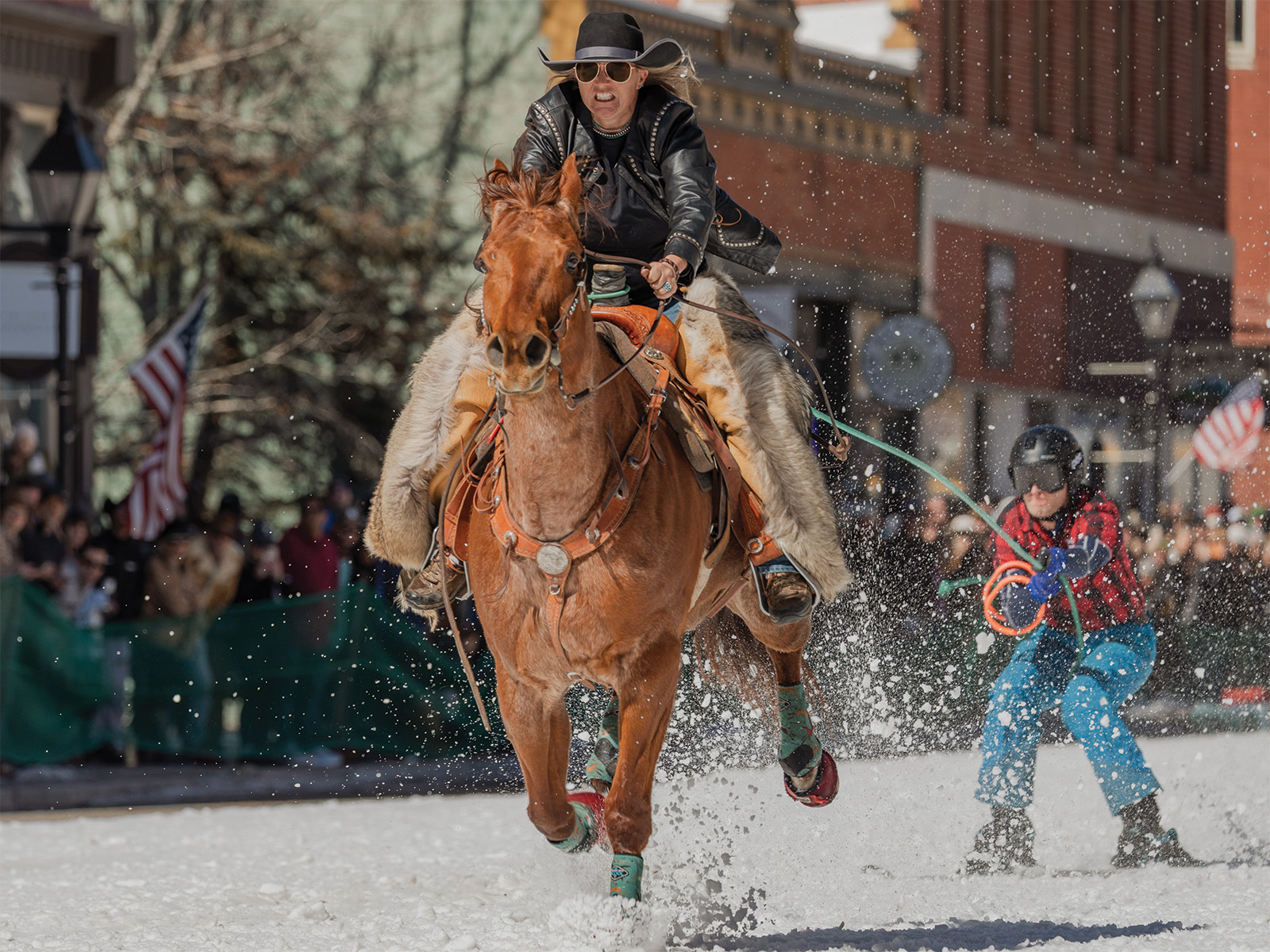
Skijoring, a fast-paced team sport that blends skiing and horseback riding, appeared in the 1928 Winter Olympics. Lately, it’s trending on TikTok, where a clip of Janelle Urista flying atop her horse Annie, red Pendleton-style coat flapping in the wind, at the state’s biggest skijoring event (held every March in Leadville) went viral. We spoke with Urista from her home in Meeker.
Editor’s note: The following conversation has been edited for length and clarity.
5280: What was your path to the sport?
Janelle Urista: Our community was trying to draw tourists in the winter. I’d ran barrel racing and roping events, so they asked me to be the horse person. We were all hooked immediately. It’s such an adrenaline rush. Now there’s a circuit you can travel [across the West].
How does it work?
You have a rider and horse pulling a skier over an obstacle course, more or less as fast as you can, with as few penalties as you can. Most of the courses are around 800 feet long, and they’ll be around a 16- or 17-second run. So it’s very quick.
I imagine communication between the rider and the skier is key.
When you’re going so fast [up to 30 miles per hour], there’s really no ability to communicate, because the wind hits your ears. Before a run, we walk the course and get a good game plan figured out. If there’s a tight gate or some rings, the skier might say, “Hey, I’m going to need a little help to get around this spot.”
What about the relationship between you and your horse?
You have to have 100 percent trust in your horse, and your horse has to have 100 percent trust in you. A lot goes into keeping the horses fit. Where I live, we’re at 6,600 feet, and in Leadville, it’s 10,000—that’s a big elevation change. So keeping them in peak condition is paramount.
What do you do when you’re not riding?
I had a long career with our local school district, retiring as chief financial officer. On the side, I’m a saddle maker, and I also do leather goods. One year, my legs had gotten so cold, and I made myself a pair of coyote [fur] woolly chaps. I swear by them. The skiers can wear ski pants, but it’s hard to wear those when you’re riding. since they are so slick. I also add fur or fringe to my coats for a little extra pop. And the crowd loves it too.
Where can Colorado fans see you ride?
Colorado has quite a few races, and I also travel the circuit nationally. Find me at events in Meeker, Ridgway, Pagosa Springs, Estes Park, Craig, Leadville, and Grand Lake.
Read More: