

The Local newsletter is your free, daily guide to life in Colorado. For locals, by locals.
Erika German often gets a weird feeling before she finds a body in the wilderness: a prickling sensation under her skin followed by a surge of adrenaline. It was September 13, 2024, and the Vail Mountain Rescue Group volunteer had been out all day hiking with a partner, Zach Smith, on Mt. of the Holy Cross, looking for clues to an unsolved case that had mystified searchers for years. The sun was sinking low in the sky, and they were almost ready to head home, carefully picking their way through the steep terrain above the boulder field at the mountain’s base. Tired from the day’s long, tricky trek, German thought this latest excursion would be just the latest in a series of fruitless searches for the missing hiker.
But as German shimmied across a skinny ledge, she heard Smith shout to her: “I think I see something red! It looks like a piece of fabric.” She walked toward her friend’s voice and spotted a flash of blue also hidden beneath the rocks. She stepped closer. The back of her neck began to prickle.
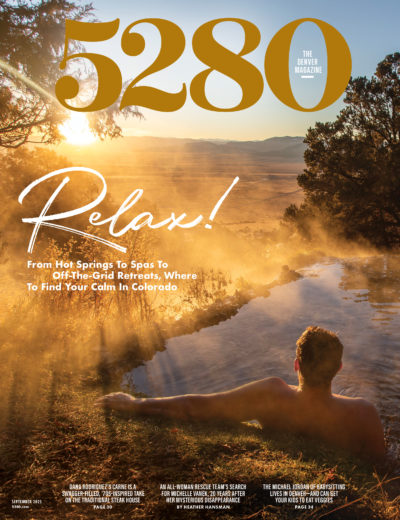
Holy Cross is one of Colorado’s most iconic fourteeners. Its distinctive cross-shaped couloir has captivated painters, photographers, and the poet Henry Wadsworth Longfellow, who penned a sonnet to its “cross of snow,” describing the peak as “sun-defying, in its deep ravines.” Holy Cross is not a technical peak, but the journey to the top is long and demanding. The standard North Ridge route gains 5,600 feet over 11 miles, and the final push to the 14,007-foot summit traverses a long, exposed scree field. Although several thousand people climb Holy Cross every year, it’s an ambitious choice for a novice hiker.
Michelle Vanek, however, was looking for a challenge. A mom to four kids, Vanek lived a busy life in Lakewood, where she volunteered at her church, St. Frances Cabrini, and at a nonprofit for teen mothers. By the summer of 2005, the 35-year-old had started to think about returning to work outside the home and taking on other adventures. Vanek was a good athlete, a former swimming star and triathlete who could handle a sufferfest. Despite growing up in Colorado, she’d never climbed a fourteener before. A family friend named Eric Sawyer, who was comfortable in Colorado’s big mountains, offered to lead her up her first one. Sawyer selected Holy Cross, and Vanek liked the choice because she was familiar with the Vail area from ski trips there.
Vanek and Sawyer (who didn’t respond to inquiries from 5280) drove to the Half Moon Campground, about 10 miles southwest of Minturn, in Vanek’s car on the morning of September 24, 2005. Vanek pulled a blue beanie over her blond hair, laced up her Sorel boots, strapped on the new CamelBak she’d bought for the hike, and put on her blue mittens. They ran into trouble almost immediately. Sawyer forgot his lunch and water filter. More troubling was their realization, a few miles into the hike, that they’d taken the wrong route. Instead of climbing the standard 11-mile North Ridge trail, they’d followed the Halo Ridge Route, a more difficult 15-mile trail around the south side of the mountain that traverses three thirteeners on the way to the summit. They likely got on the wrong path at the parking lot, where construction of pit toilets may have made pinpointing the right trailhead tricky. It would be too complicated to turn back, they decided. They were behind schedule and hoped to make up time. So they kept climbing.
Vanek and Sawyer navigated seemingly interminable switchbacks and fields of ankle-cracking talus, gaining more than 5,000 feet of elevation. By early afternoon, about a half-mile and 500 feet below the summit, Vanek decided she was too tired to go on. She was low on water and food, and she was starting to feel the throb of altitude sickness. She encouraged Sawyer to head to the peak while she waited. He told her he would tag the summit and then meet her on the northeast ridge, where they planned to begin their descent. Sawyer indicated a point she should hike toward and then headed for the top. He summited at 1:42 p.m., briefly called his wife, and then jogged down to find Vanek.
She wasn’t in the place they’d planned to meet. Sawyer yelled her name, scanning the trail. Some other hikers who had been with him on the peak heard him calling and came down to help. Sawyer frantically asked anyone who came by if they’d seen his friend. Then he headed down toward the trailhead and called 911.
That night, Vail Mountain Rescue, a volunteer search and rescue group dispatched through the Eagle County Sheriff’s Office, went out with dog teams to try to find her. The dogs picked up her scent, and the group combed the mountain until 2 a.m., when the animals were exhausted and sharp boulders had cut up their paws.
The hunt for Michelle Vanek became the largest search for a missing hiker in Colorado history. The U.S. Forest Service dispatched a plane. Rescuers brought helicopters, horses, and dogs. The mountain crawled with as many as 850 searchers. The operation grew so large in part because the area they had to scour was vast, and also because Vanek’s family and friends rallied all the volunteers and resources they could find.
It’s not uncommon for hikers to run into trouble on Holy Cross. Vail Mountain Rescue responds to about 15 individuals or groups there each year. Scott Beebe, a longtime member of the team, says hikers tend to get confused near the summit. Instead of taking the correct route to the North Ridge trail, which looks steep from the top, they can mistakenly head down mellower-looking paths that actually dead-end above cliffs. The searchers traced these and many other routes, looking for Vanek, to no avail. A few days in, snow began to fall. By the eighth, when rescuers were trudging through two feet of powder, the search was called off. Everyone was baffled. “We ended up the last day with not a clue, not a gum wrapper, not a boot print, absolutely nothing,” wrote searcher Tim Cochrane in his report to the sheriff. “How can anyone just vanish into thin air?”
Media coverage of the story continued for months, though there were scant new details to report. “Missing Hiker’s Trail Littered With Questions,” the Denver Post declared that December. A year earlier, PBS newscaster Gwen Ifill had coined the term “missing white woman syndrome” to describe the disproportionate share of news stories focused on cases like Vanek’s. White women, especially those who are young and conventionally attractive, make up almost half of all missing person stories covered by the media. This attention can help solve cases, but it can also lead to wild speculation.
The internet erupted with baseless theories about Vanek, with some commenters concluding she had been abducted by aliens. Around 2014, when the hit podcast Serial fueled a boom in true-crime media, online sleuths began picking over the case with renewed interest. “Eric Sawyer murdered Michelle Vanek…plain and simple,” someone wrote on Reddit’s Unsolved Murders forum in 2020. Her story was set to ominous music on podcasts including Lost in the Woods, Locations Unknown, and Mysterious Headlines. She became a chapter in the book Colorado 14er Disasters: Victims of the Game. Armchair experts turned over the same few tantalizing details: A duffle bag with a shotgun in it was found near the trailhead. Separately, rescuers encountered a man camping on the mountain who wouldn’t come out of his tent for questioning. A dog team spotted blood in the snow, but the weather came in so fast that handlers weren’t able to follow the track. None of these leads went anywhere, but each contributed to the assumption that Vanek had encountered a violent end.
For Ben Vanek, Michelle’s husband, the endless speculation was painful, adding to the immense, unresolved grief he already felt. “I could be walking down the street and see someone with a similar profile and double-take: Was it her?” he says. “Because nothing was found, your brain goes to the oddest things: Was she kidnapped? Was she killed and buried?… We knew that she would have never left the family. She was too proud of all she accomplished. She just loved her kids, me, her nieces and nephews.” The most painful aspect of the rumors, Ben says, was that they flattened the story of someone who was devoted, caring, and complex into a cheap, sensational tale.
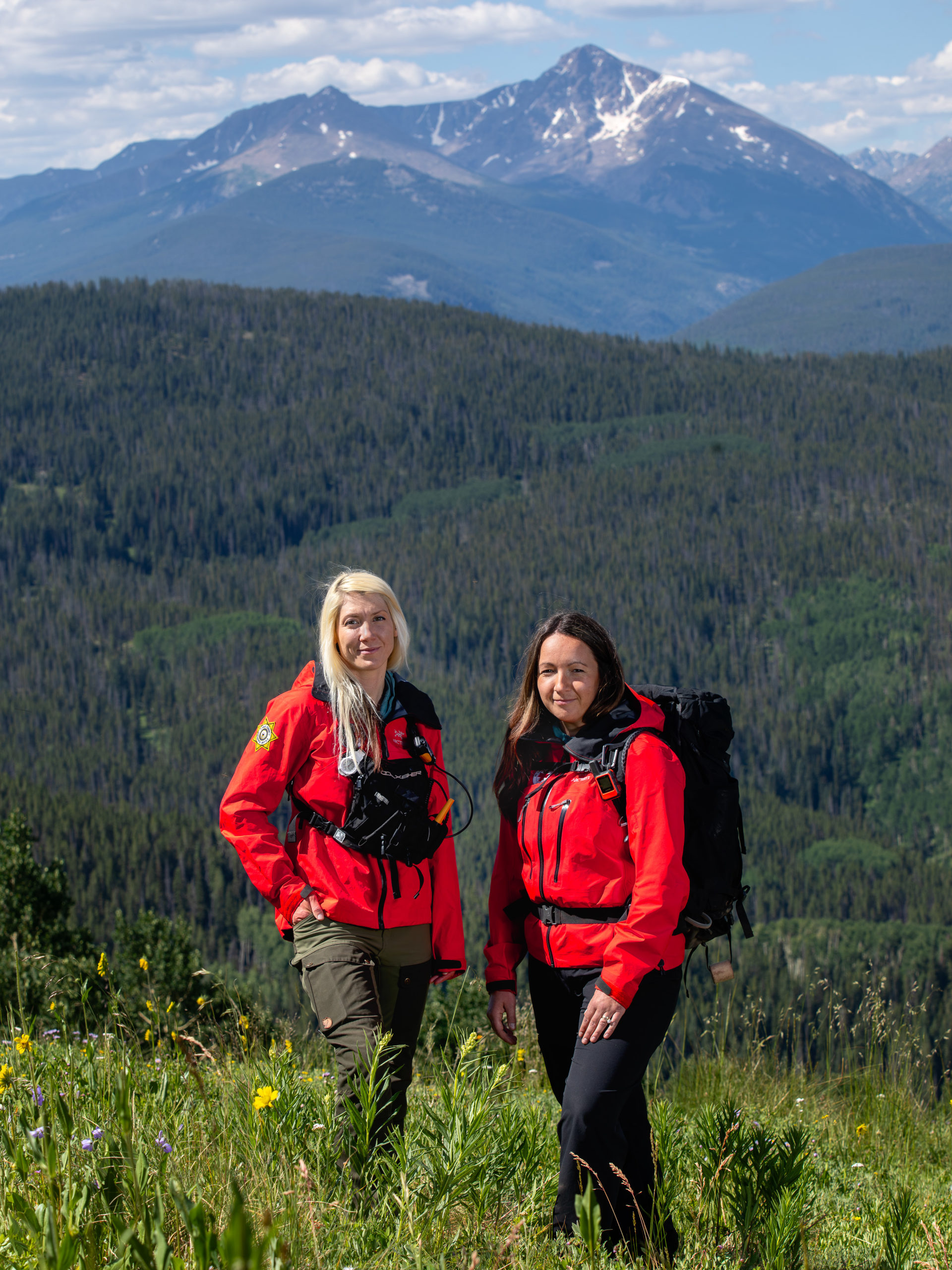
Cases like Vanek’s seep into the culture far beyond cranks on Reddit threads. News stories, podcasts, and rumors about the rare negative things that happen to women in the wilderness can make it seem like they don’t belong outside or aren’t safe there. These narratives also perpetuate untrue stereotypes that women aren’t as capable as men. Erika German says that men have questioned her abilities while she was rescuing them, with one asking, “What is she gonna do?” That attitude also exists within the rescue community.
German was already an experienced river guide and swiftwater rescuer when she moved to the Vail Valley in 2011, having grown up rafting in North Carolina. Comfortable with long days in the mountains and sketchy terrain, she tried to join Vail Mountain Rescue in 2012. German passed all of her initial tests but wasn’t invited to go on searches until after members of the organization saw her working as a rescuer at a whitewater race. Shortly after, she became one of four female members of the 75-person team. Early on, she felt like she had to constantly push to be invited on missions. Her experience isn’t out of the ordinary: Only about 30 percent of search and rescue groups’ members nationwide are female.
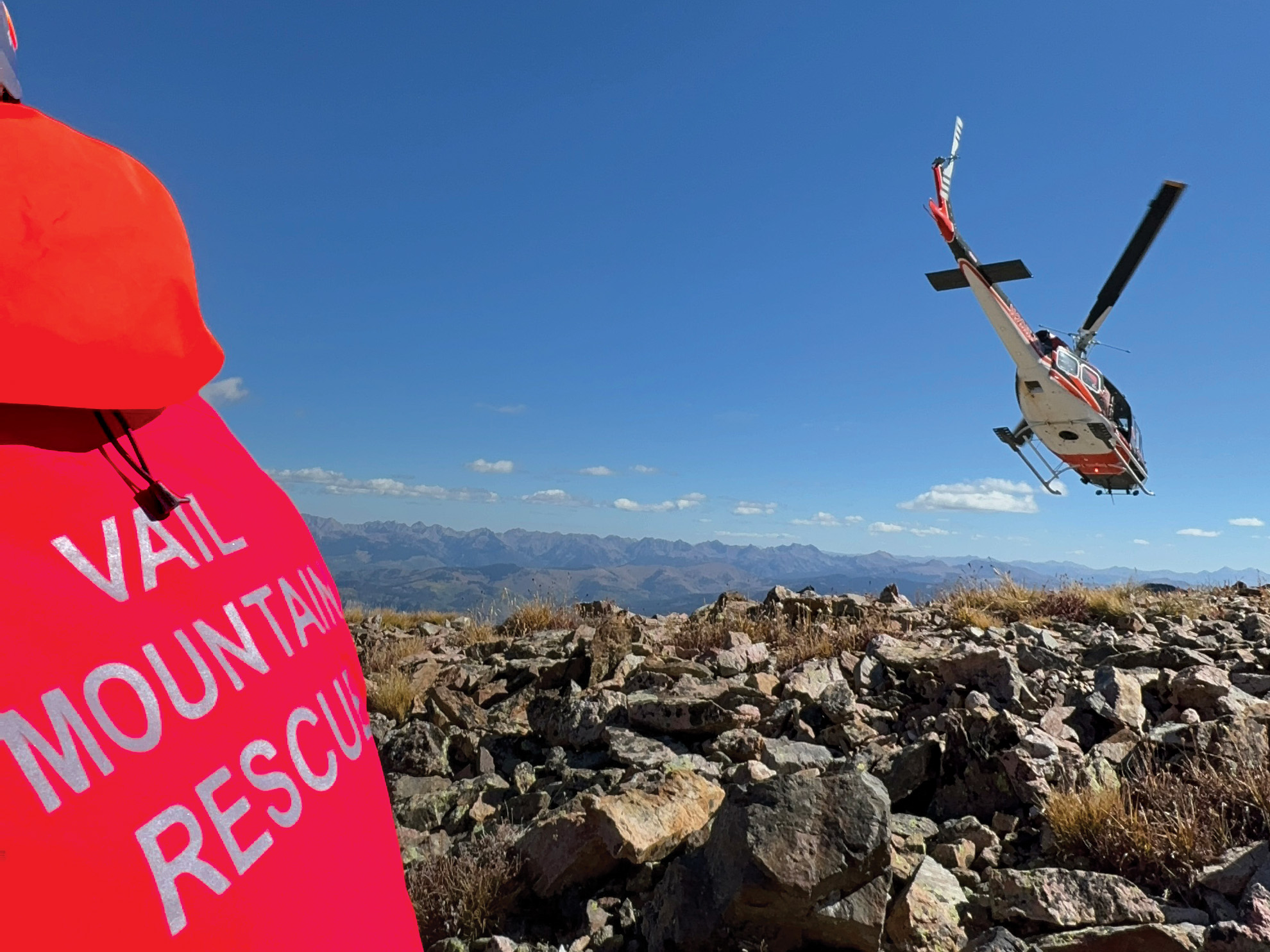
In Colorado, search and rescue volunteers don’t get paid. In Vail, they do everything from tracking down missing skiers to pulling off perilous high-rope, helicopter-based hoist evacuations from remote, backcountry peaks. Funded entirely by grants and donations, the group performs about 170 rescues each year. And for the past two decades, Vail Mountain Rescue leaders continually told volunteers to be on the lookout for clues to Vanek’s case any time they had a mission on Holy Cross.“We were always reminded: black leggings, blue jacket, blue hat,” Beebe says.
German didn’t need to be reminded. Vanek had been a part of her life since she arrived in Colorado: German just happened to move into a house with Betsy Cochrane, the widow of Tim Cochrane, who had directed the initial search for the missing hiker. Betsy often spoke about Tim’s rescue missions, saying he’d lived the last years of his life wondering what had happened to Vanek. German became fascinated by the mystery.
Despite the media attention, there remained no new clues about Vanek’s disappearance—until 2022. In August of that year, a local ski coach and his son were bouldering in the Lake Patricia area, just off the northeast side of Holy Cross. They found a Sorel Asystec hiking boot propped up on a rock. The coach was familiar with Vanek’s story and called in the coordinates to the sheriff’s dispatch. Ben Vanek later confirmed that the boot had belonged to his wife.
Vail rescuers brought in search dogs to sniff around the area, but nothing else turned up. The find, however, inspired renewed interest in the then-17-year-old case. It also raised new questions. The boot had been on the other side of the mountain from where Sawyer had left Vanek and where most of the original search occurred. Rescuers hadn’t checked that area until the last day, when the snow was two feet deep. Had they been looking in the wrong place the whole time?
The next clue came from an unexpected place. In fall 2023, Michelle Vanek visited Beebe in a dream. “She told me she wanted to be found by a team of women,” he says.
Outside of his rescue work, Beebe is a Lutheran pastor. He’s not someone who takes spirituality lightly; he’s also not someone who often has visions of dead women in his sleep. “Every guy I’ve told about the dream tells me I’m nuts. Every woman, they all say, ‘Yeah, of course.’ ” Beebe says. One man who didn’t think he was crazy? Ben Vanek. His wife was a deeply spiritual, religious person, he says: “For her to come to Scott Beebe and say that—that was her.”
Beebe shared his vision with some of the women in Vail Mountain Rescue’s leadership. In October 2023, team member (and current vice president) Emily Brown emailed all 17 women on the organization’s 75-person roster about starting an all-female rescue group. “The Michelle Vanek case had historically been dominated by males,” she wrote. “The initial eight-day search…and every effort in between has only been run by males. Personally, I don’t think Michelle wants to be found by a man.” Six women, including German, signed on. They met that spring at Vail Mountain Rescue headquarters in Edwards and started sketching out a mission. They decided to go in August, when snow in the area would be at a minimum.
Brown says that search and rescue—especially the search part—is part pattern recognition, part logic, part human-behavior analysis.
Their team used all those skills as they researched the files and documents from Vanek’s disappearance. Without the time pressure of the original search, they could study every detail. “I spent over 20 hours going over all the files, basically putting everything into one big map,” German says. Another member of the team, Megan Twohig, works for the mapping company CalTopo and helped German use its software. They sorted previous search paths by date, digitized hand-drawn maps, and placed coordinates for where the initial rescuers had brought in dog teams and helicopters. On the screen, the women saw gaps in the initial strategy: a series of couloirs on the north and northeast side that had barely been searched. “When Emily and I initially looked through all the information, it didn’t feel like there was much in there,” German says. “But when you put it all in a map, it gets really interesting.”
Beebe thinks that the 2005 rescuers never looked in those areas because they never deviated from their original plan, something he now attributes to the way the male-dominated search was run—i.e., driven by a single leader. “In mountain rescue, we have what’s called the Mattson consensus, which is basically that if you’re searching and can’t find what you’re looking for, you bring everyone together, so everyone has a chance to chime in,” Beebe says. “That’s standard protocol, but that didn’t happen on that search.”
German points out that the women’s crew had the advantage of modern technology and endless time. Still, she does think their approach was different. In addition to conducting an in-depth data analysis, they slowly and deliberately tried to understand what Vanek had been thinking on that ridge. “Humans tend to behave very similarly when they’re lost,” Brown says. “They go downhill to water and to shelter.” With that in mind, they prepared to return to Holy Cross.
Summer mornings, before the heat rises, are usually calm in the Vail Valley. But the winds were already whipping before sunrise on August 20, 2024, when Brown, German, and four other members of the Vail Mountain Rescue women’s team packed into a helicopter bound for Holy Cross. They intended to land on Holy Cross Ridge, adjacent to the fourteener, but wind prevented the pilot from reaching the spot. She dropped them three miles away, next to Seven Sisters Lakes, instead. From there, they picked the path of least resistance across a ridgeline of three 13,000-foot peaks.
The group wanted to get inside Vanek’s head, to inhabit the choices she might have made. They gathered at the point where Sawyer last saw her and gave each other the same directions Sawyer had given Vanek: Head toward the hump on the north ridge. In pairs, they followed what those instructions meant to them, with each group taking a slightly different route. Yet every searcher ended up on the east side of the north ridge, above a series of boulder-filled couloirs.
Unlike German, Brown had never experienced a sixth sense before finding human remains in the wilderness. She’s logical and believes a successful rescue is based on pattern recognition and information synthesis. But that evening, up on Holy Cross, something stirred in her. “We went and sat at the edge,” Brown says. “The wind came up, and we were all like, ‘She’s down there, I can just feel it.’ ”
Dusk was falling, so they marked three places they wanted to search later and headed home. They agreed to come back in three weeks. In the meantime, if anyone wanted to search on their own, they could.
German and Brown laugh when asked about Beebe’s dream. Then German gets quiet: “Honestly, weird stuff had been happening.”
Before the group’s August 20 mission, German was hiking into the basin where the boot had been found, hoping to locate a good place for the helicopter to land. While on Half Moon Pass, she got a page: Another woman was missing just a few miles south. German felt a strong calling to find her and spotted her body from far away the next day. The similarities to Vanek’s case weren’t lost on her. “I felt their spirits were leading me to one another.”
German kept returning to Holy Cross after the heli mission. On her days off, she and whatever partner she could find hiked into the drainages that dropped off of the northeast ridge and climbed through the boulder fields below. She’d analyzed the maps and looked at the data, but on the ground she could understand the terrain better: the chunky, confusing maze of boulder fields that constantly shifted as she crawled through looking for clues. Still, she found nothing.
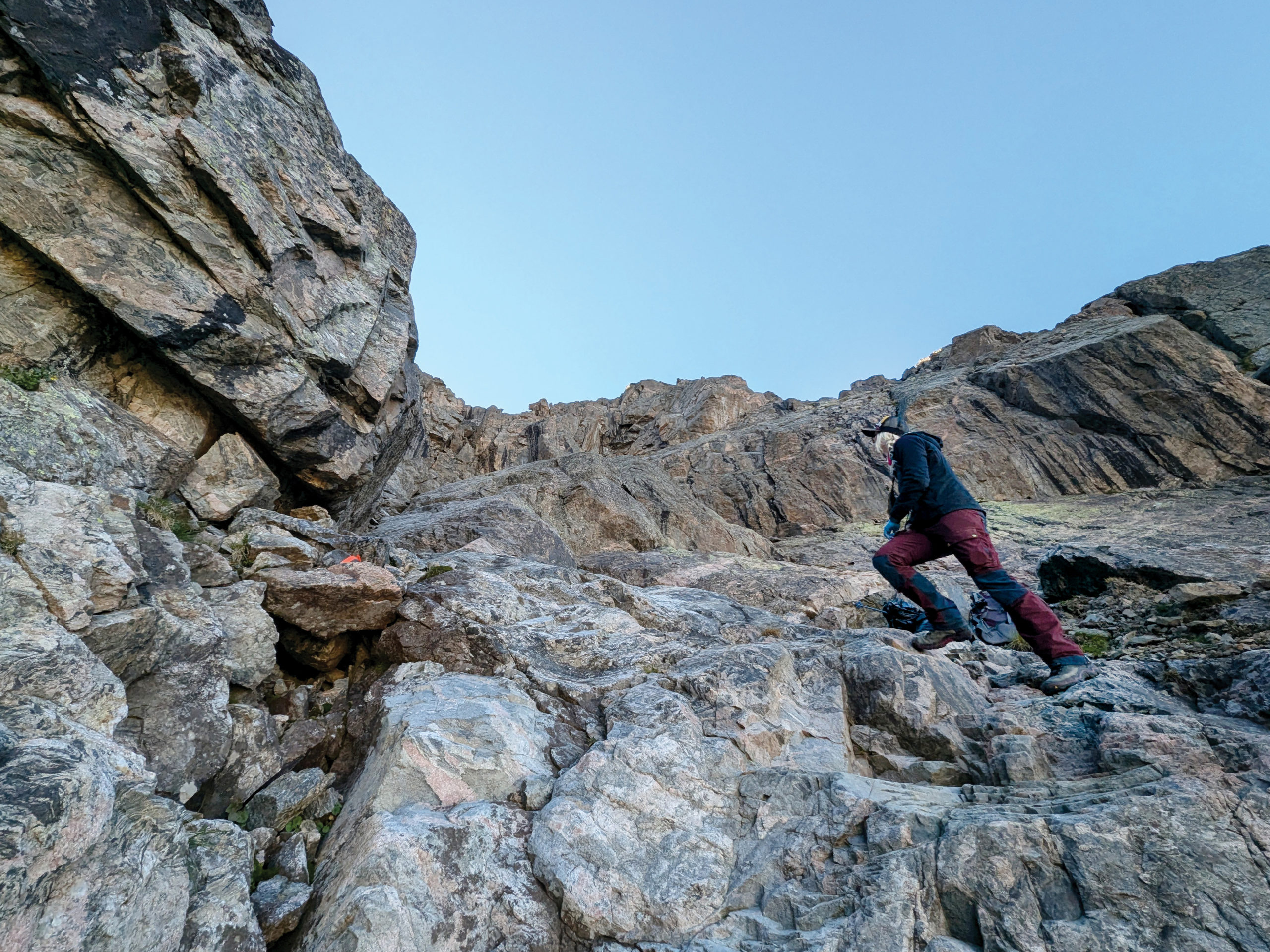
In September, German and Zach Smith, another member of Vail Mountain Rescue, headed to Holy Cross to check out some of the harder-to-access terrain. They hiked down from above, navigating a sloping field of boulders and scree before free-climbing into couloirs that ended in sheer drops. The route above the cliffs was tricky and exposed, and while German had a good idea of where they could get through safely, they progressed slowly and carefully.
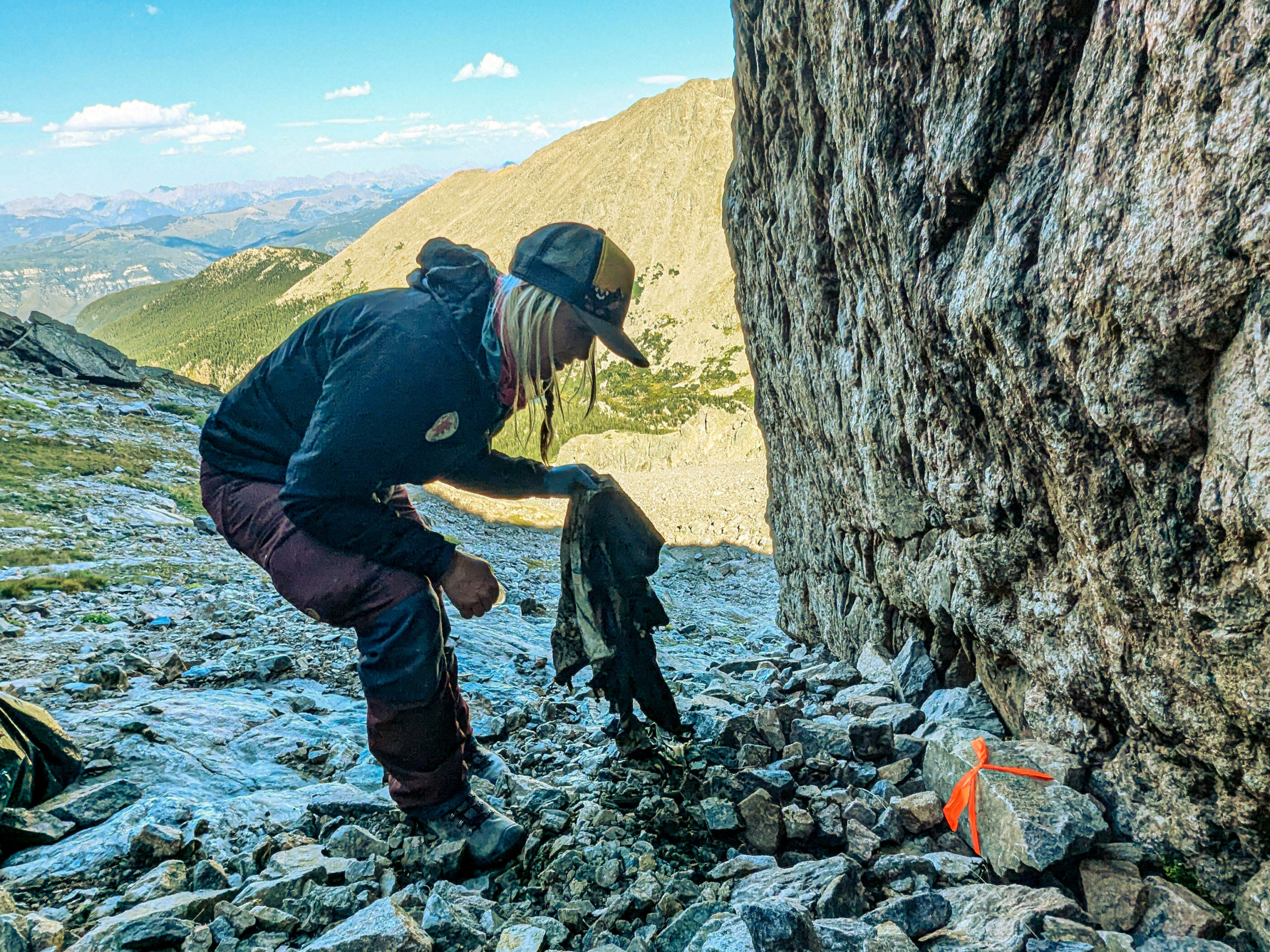
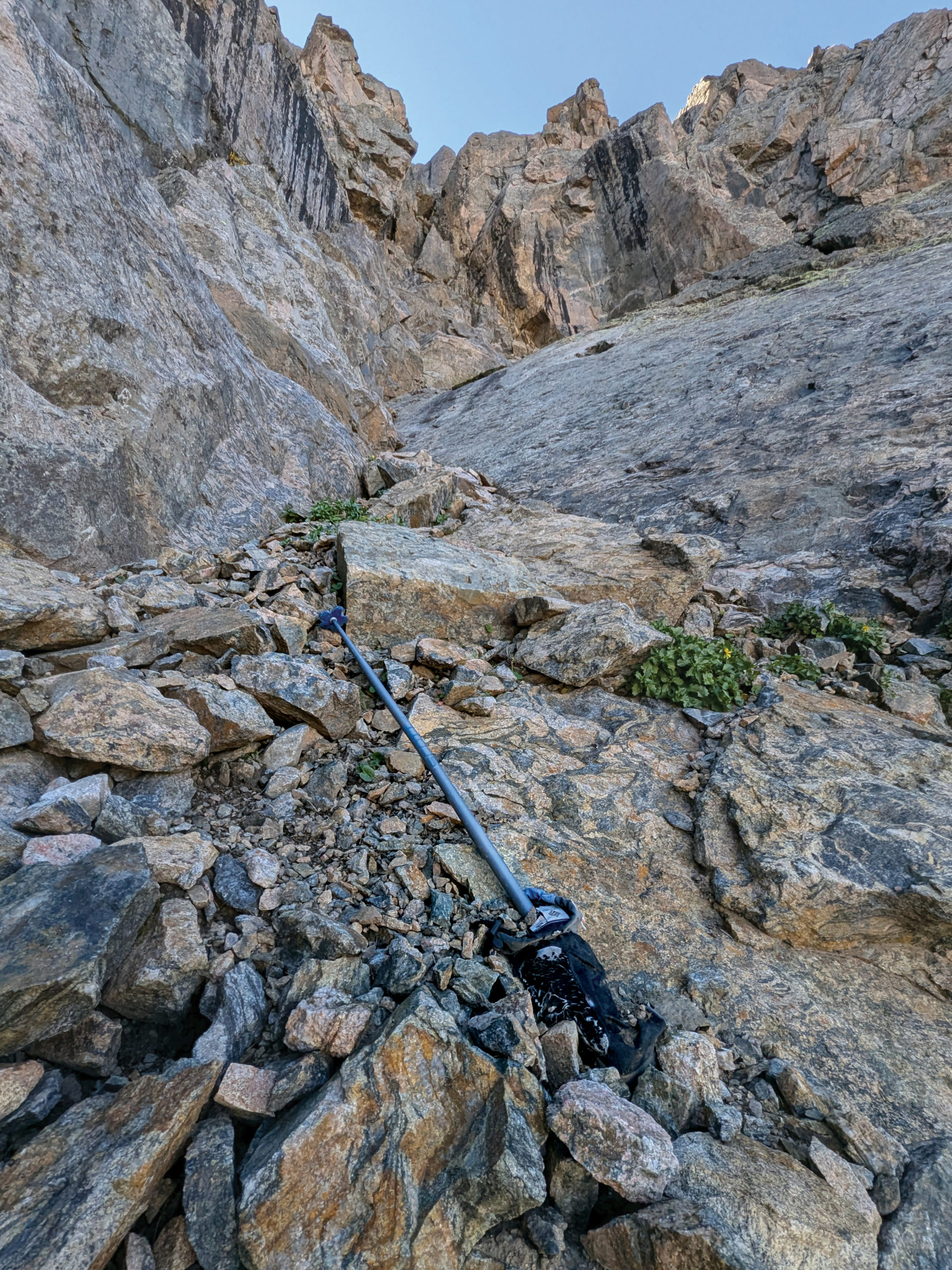
It was mid-afternoon when Smith shouted to her. The piece of fabric he’d seen matched the description of the red shirt Vanek had been wearing. In the rubble, they found a battered ski pole. German lifted it up. It had a blue mitten attached to it—similar to one she’d seen in the last photo taken of Vanek. “That’s when we called Scott and Emily, and got them to call the sheriff,” she says.
They took photos of everything they saw, including a tiny fragment that would later be identified as a cochlear bone. The sheriff told them to collect any belongings but to leave the human remains. They gathered a backpack, camera, and other detritus and hiked down the valley and out through the campground, passing groups of people, hyperaware of what was in their packs and shaking from the adrenaline. “The initial thought is like, Oh my god, we found someone who had been missing for 19 years,” German says. She heard wolves howling in the coming dark.
They met Brown, Beebe, and the sheriff at the Holy Cross ranger station, where they pulled out the gear from the pack: a crushed Nalgene, a digital camera, car keys, and a shriveled-up GU gel packet that matched what Sawyer had given Vanek when they’d separated. The last item they shook out was the one that elicited the most emotion: the blue knit hat Vanek had been wearing the day she went missing.
A team went back in October to recover evidence that would lead to DNA identification. “One of the first things they found was her intact spine, sitting at the mouth of a cave,” Beebe says. They discovered more bones, including a scapula with a lavender beaded necklace wrapped around it. They sent a picture of the jewelry to Ben Vanek, who recognized it immediately—he’d bought it for Michelle on a vacation to Las Vegas. “When we saw that,” Beebe says, “we all started bawling.”
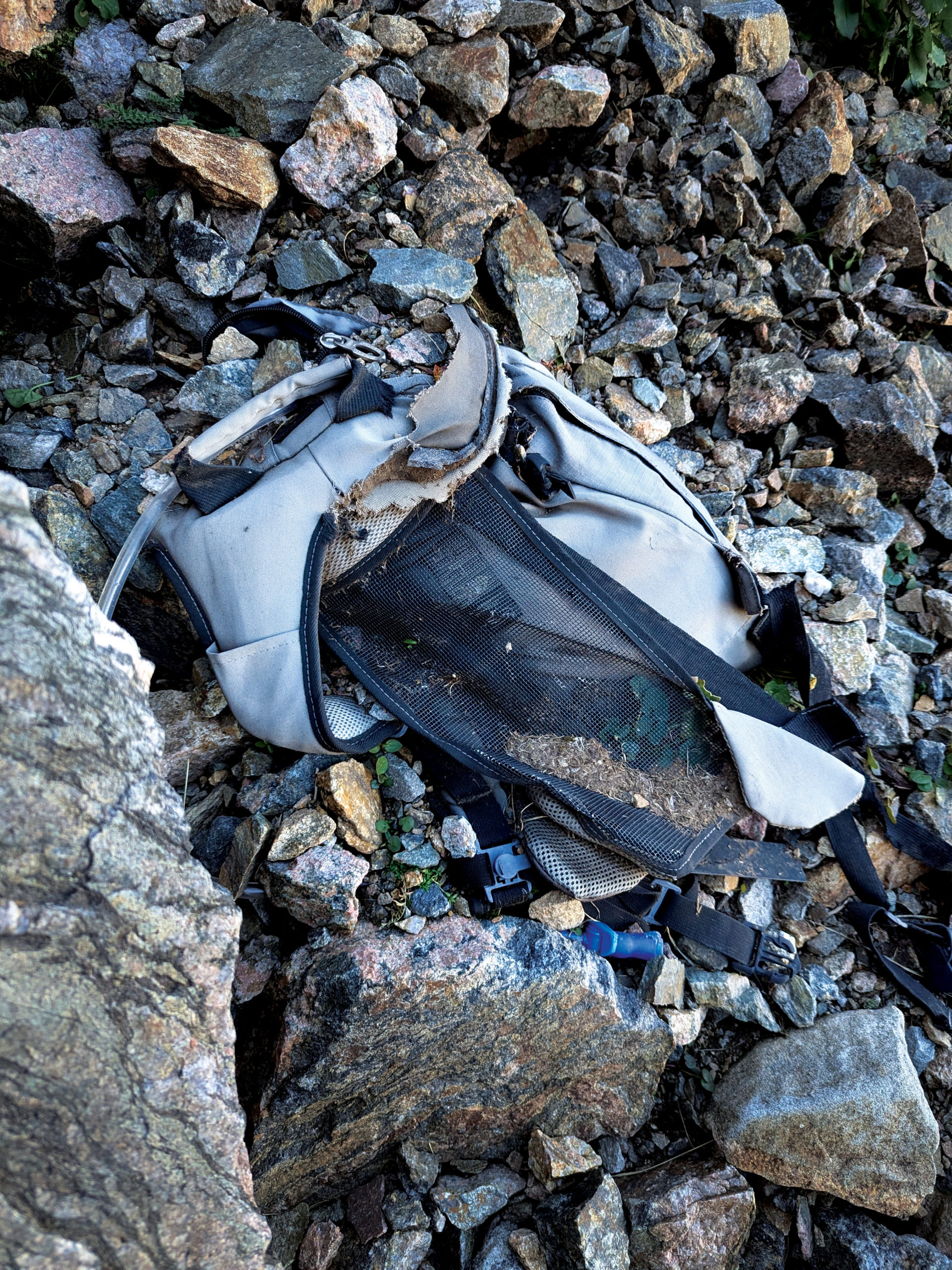
The remains not only confirmed that the bones belonged to Vanek, but also put some rumors to rest: Her body was discovered only a half-mile from her last known location, and authorities were confident there was no foul play. A forensic anthropologist reported the fracture on the spine was consistent with a fall.
From these clues, the rescue team and the sheriff’s office started putting together a picture of what might have happened. They believe Vanek made it to where Sawyer told her to go. From that ridge, you can look down to see Lake Patricia, just past some gently rolling meadows. Michelle was out of water and had been hiking for hours. Rescuers think she started heading for the lake, not aware that the meadows abruptly end in sheer, 30-foot drops. Their best assumption is that she started downclimbing, desperate for water, and fell. It was likely a tragic accident.
That clarity was a balm for her family. “It feels like peace,” Ben says. “I don’t try to use the word closure—that means the end. She will always be a part of our lives, but this is a chapter we can now close for Michelle. It feels like a cloud was lifted around our house and family.”
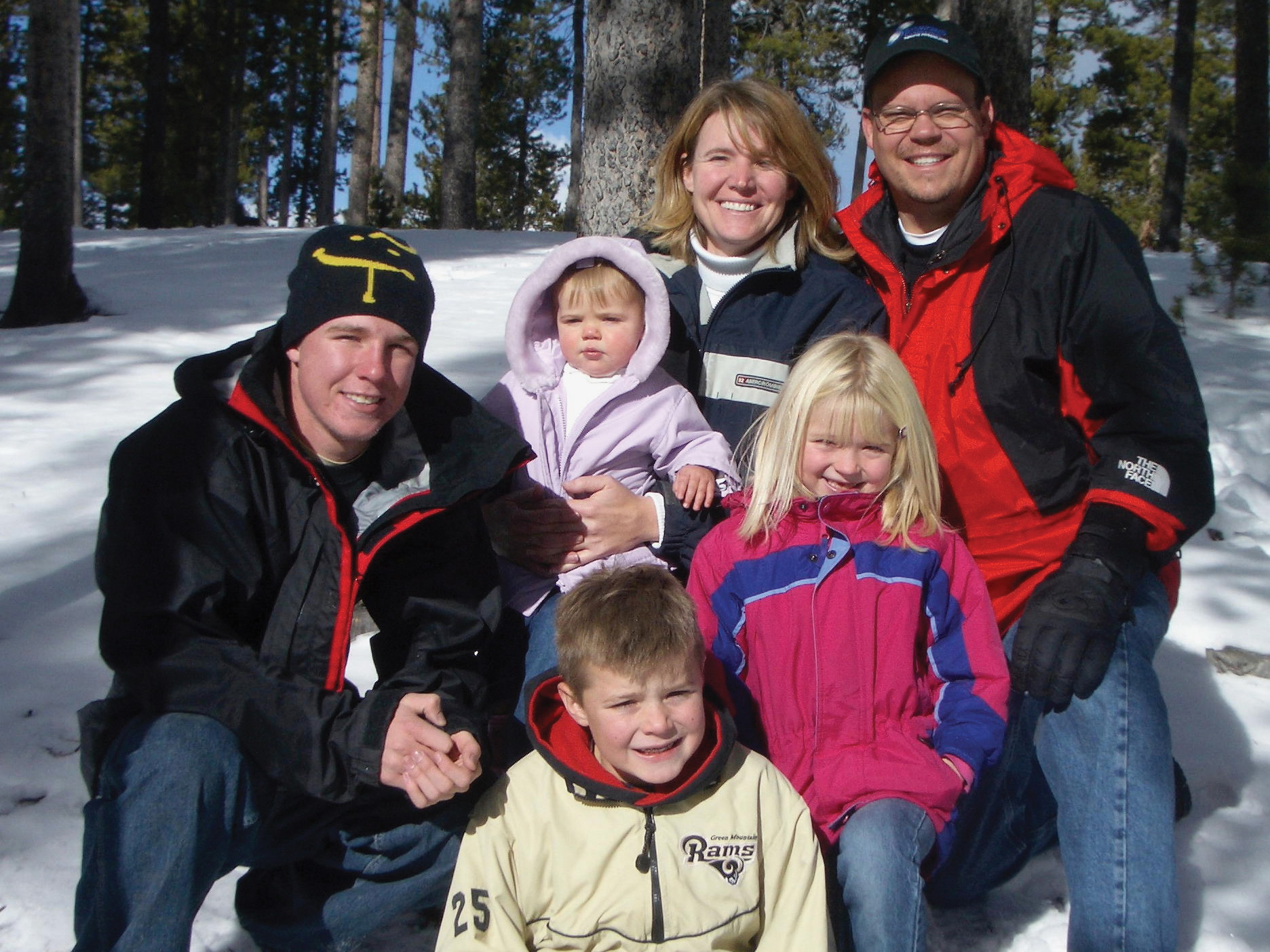
In October, Ben and his daughter Haley, who was a toddler when her mother went missing, met the team at Vail Mountain Rescue’s headquarters to talk about the search and share memories of Michelle. “That’s what brought humanity back to it,” Ben says. “Haley, who is 21, really didn’t know a lot about how Michelle’s disappearance touched a lot of people. It changed her outlook when she met those women. It shed so much light on her mother.”
The meeting brought German some peace, too. “When I met Haley, she said, ‘I’ve lived my entire life with people having these theories, like, your mom got abducted by aliens.’ That’s one of the leading factors I’ve taken away from rescues. Being able to close cases really helps families.”
In addition to Vanek lending her own ghostly hand, Beebe credits female intuition for Vail Mountain Rescue’s success after nearly two decades of failure. Brown isn’t so sure: “I truthfully think that if a group of boys did what we did, they could have found the same results.” But she concedes their approach was different. They were thoughtful and analytical. They also checked their egos and took time to listen to each other, considering every instinct. “A huge part of putting the puzzle pieces together was having a lot of communication and running through the theories and bouncing ideas off each other,” Brown says.
Along with changing the story for Vanek and her family, their discovery changed the narrative for the rescuers, too. It’s metaphysical, but it’s also logical. The women on the team say that they do have to be more perceptive and aware outside than men do, and this search has underscored the benefits of leaning into that. Of trusting their guts and their processes. Of marrying technology and communication. Of speaking up. And if anyone in the outdoor community still has any doubts about their place in the mountains—or in rescue work—they just have to look at the facts.
“We let men look for 19 years,” Beebe says. “Women found her in less than three weeks.”
Read More: