

The Local newsletter is your free, daily guide to life in Colorado. For locals, by locals.
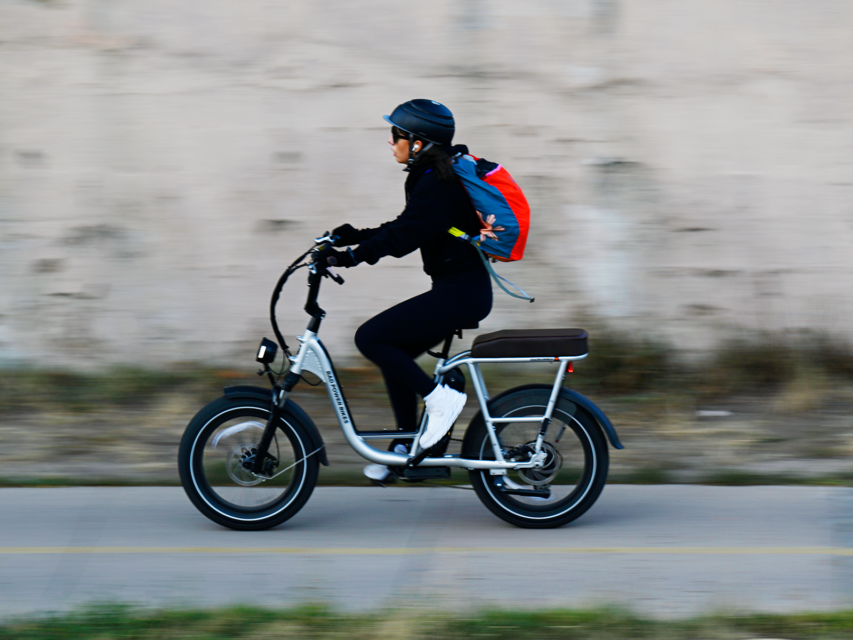
Over the past few years, e-bikes have exploded in popularity across the Centennial State, thanks to their ease of use and relatively painless upkeep. There is, of course, another reason why e-bikes are trending around town: incentives have made owning one a lot less expensive.
In an effort to promote sustainability and improve traffic congestion downtown, Denver’s Office of Climate Action, Sustainability and Resiliency (CASR) launched an e-bike rebate program in 2022; the initiative was so popular that residents often snatched up all the available vouchers within minutes.
The program returned last month, but given its wide appeal, the city has narrowed the scope of who qualifies. While the original program was open to all Denverites, the 2026 version is restricted to residents who earn less than the city’s median income—$98,100 annually for a one-person household, $112,100 for a two-person household, $126,100 for a three person household, and so on.
The standard rebate from CASR is $675 and can be used in conjunction with a $225 rebate from the state of Colorado, which means buyers can receive up to $900 off a new set of electric wheels from a qualifying shop.
Read More: How to Score an E-Bike Before Colorado Tax Credits Shrink
Vouchers from the May 19 release date are already gone, but there are two more rounds: July 7 and September 8 (CASR releases 600 at a time).
If you still haven’t embraced the bicycle’s electric cousin yet, we’ve put together this how-to guide for curious locals who want to get in on the trend—and the discounts.
Jump Ahead:
- What e-bikes qualify?
- How much will the e-bike cost?
- What should I do if I’m interested in an e-bike?
- Where can I buy an e-bike with a rebate voucher?
- How do I know if I qualify for the rebate?
- How do I apply?
- What e-bike etiquette should I know?
What are the different types of e-bikes, and what qualifies for the rebate?
To qualify for the city’s e-bike rebate voucher, the bike must be new and have a battery that’s 750 watts or less. The bike can’t be gas-powered, and you can’t use the rebate toward full-suspension mountain bikes. Beyond that, Denverites can use the rebate for any of the three main classifications of e-bikes: Class I, II, and III. Each variation has a battery and motor.
- Class I: E-bikes with pedal-assist motors that have a top speed of 20 miles per hour
- Class II: E-bikes with throttle-assist motors that can go up to 20 mph; the throttle is typically a twist throttle, like on a motorcycle, or it can be a button located on the handle bar
- Class III: E-bikes that can go up to 28 miles per hour using either a pedal-assist motor, a throttle, or both.
The main difference between the classes, says Zach Gordon, a sales associate at eBikes USA, an electric bike shop in Valverde, comes down to how much help you want when you ride. “Some of our bikes feel like you’re getting pushed,” Gorden says, “while some of them feel like you just have stronger legs.”
Class I and Class II e-bikes are street legal and can be ridden anywhere around Denver, whereas Class III rides have more restrictions due to their faster top speeds. For example, Class III e-bikes are not allowed on bike paths in the city, where the speed limit is 15 mph. Fair warning: A ticket for speeding on a bike path starts at $100.
Depending on battery size, e-bikes take roughly four to six hours to charge. A commuter style e-bike, which has a more comfortable seat position, has a 40- to 60-mile range before it needs to be recharged. Road e-bikes are able to go even farther on a single charge. Rebates can also be applied toward e-cargo bikes, a larger style built to carry extra passengers or extra stuff, such as groceries.
Adaptive e-bike rebates are also available for Denver residents who are unable to ride a traditional bicycle. The rebate is $625, and it is not income-restricted. Moreover, it’s a separate application process and folks don’t have to wait for voucher release dates to apply.
So, what’s the damage to my wallet?
Pricing can vary greatly, but on average, the entry point for a standard e-bike is roughly $1,500. The prices for e-cargo bikes and more premium rides increase from there, with some higher-end two-wheelers costing $3,000 or more.
What should I do if I’m interested in getting an e-bike?
First, it’s helpful to think about what you plan on using the e-bike for. Are you going to use it to run errands and pick up groceries? Will you be commuting to work? Are you interested in trail riding? “Narrowing down what style of riding you’re going to do is important,” says Sam Bagnall, former general manager of RiNo’s Bike Source, which is now part of Incycle Marketplace. “That’s going to be super helpful for shops to help you narrow down models.”
The next step, naturally, is to head to a local e-bike shop and take a test ride. In fact, the city is encouraging any Denverites interested in an e-bike rebate to test ride at local shops before applying for one of the limited vouchers.
While any additional research you can do on your own helps, Bagnall and Gordon both note that what looks great on paper might not feel right in the saddle. “Once you come in and ride a bike, that’s the best way to know if it’s a good fit,” Gordon says. “Everybody is going to ride a little differently, it’s kind of a person-by-person basis.”
Where can I buy an e-bike with a rebate voucher?
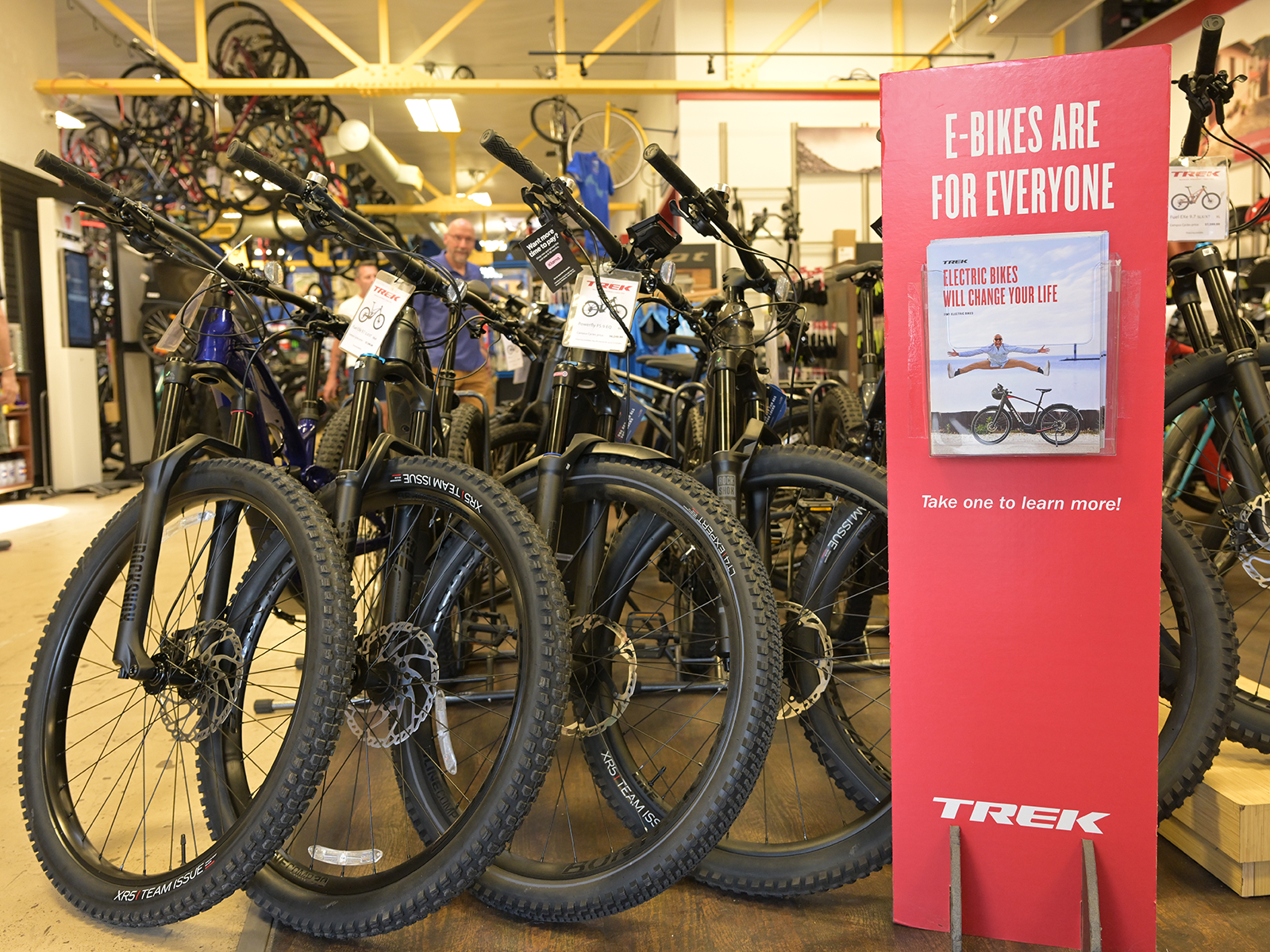
You can browse the list of all 28 participating bike shops across the metro area on the city’s website. All of the shops have a brick-and-mortar retail location in Denver that offers service and repair.
How do I know if I qualify for the rebate?
Denverites 16 years or older can apply for the rebate program, so long as they have supporting documents proving both their residency and household income; rebates are limited to one e-bike per person. You cannot submit W2s, state tax returns, SNAP, or Medicaid forms as proof of household income. Visit the city’s rebate website for a full list of qualifying documentation.
How do I apply for the rebate?
The city’s online portal for applications opens at 11 a.m. the morning of each release date. However, you can prepare your documents and create an account in advance so you’re ready as soon as the portal opens. (Interested Denverites are encouraged to sign up for the city’s newsletter for reminders and updates about monthly rebate releases.)
The city does not expect vouchers to be claimed as quickly as in previous years, and the review period takes about 14 days each round. Applicants will be notified if they qualify to receive a rebate, and the voucher—sent via email—expires after 45 days.
New this year is a waitlist. Expired vouchers that go unused will be reissued to folks who originally applied but did not receive one.
What e-bike etiquette and other tips do I need to know about?
Great bikes come with great responsibility. Before investing in an e-bike, Bagnall says that it’s important to have the basics of general bike care down. Brush up on your knowledge of fixing flats and make sure you have proper lubrication for your chain. But one of the perks of e-bikes is that they’re mostly like caring for regular bikes.
Be sure you’re familiar with local bike laws and e-bike–specific laws as well. “Look out for signs with speed limits,” Gordon says. “Make sure you’re not going too fast past other bikers. Remember that some e-bikes are allowed on certain trails and some e-bikes aren’t.”
Bagnall stresses not to ride negligently or get carried away with speed simply because you can. Beyond that, just have fun and enjoy the ride.